
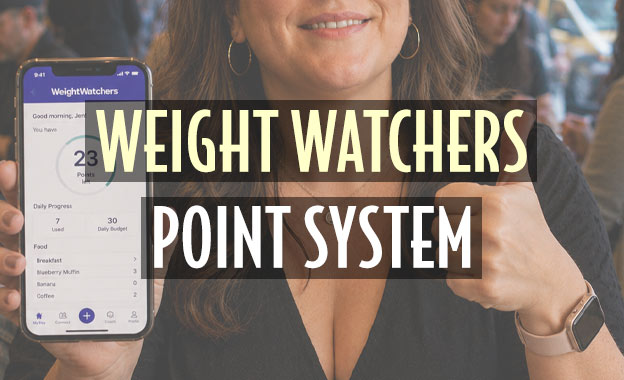
If you have ever looked at a nutrition label and felt overwhelmed by the wall of numbers, you aren’t alone. Weight Watchers (WW) first introduced Points in 1998 to solve this exact problem, taking complex nutritional data and turning it into a single, easy-to-understand number.
WeightWatchers’ goal is simple: to help you make healthier food choices faster without having to count calories or be a professional nutritionist. Even though their point system has changed and evolved over the years, it’s still basically the same effective system for losing weight.
Here’s an explanation of what points are and how the Weight Watchers’ point system works.

*View all WW offers here!
What exactly are Weight Watchers Points?
Points are numerical values assigned to every food and drink to help simplify your decision-making. Instead of just looking at one thing, like calories or fat, Points provide a “health value” for each food.

Weight Watchers Registered Dietitians use a specific mathematical equation to determine a food’s Point value. This equation is designed to nudge you toward better nutrition:
- Nutrients that lower Points: Fiber, protein, and unsaturated fats.
- Nutrients that raise Points: Saturated fat and added sugars.
Because this system looks at the whole nutritional picture, it doesn’t just follow “diet trends” like the fat-free craze of the ’90s or the current protein obsession. It focuses on the overall impact a food has on your body. While there’s a lot of science behind the Weight Watchers point system, all you have to do is log your food and stay within your points budget!
Points vs. Calories: What’s the difference?
A common question is whether Points are just a fancy way of counting calories. The answer is no. While Points take calories into account, not all calories are created equal.
For example, consider two 300-calorie options:
- A balanced meal of lean protein, veggies, quinoa, and olive oil would cost you about 4 Points.
- A 25-ounce soda with the same 300 calories would cost you about 25 Points.
The Point system makes it immediately clear which choice will leave you feeling more satisfied and nourished.
How your personal Points Budget is calculated
One of the best parts of the system is that it isn’t one-size-fits-all. Your Daily Points Budget is uniquely tailored to you based on several factors:
- Age, height, and weight
- Gender
- Your metabolic rate
- Whether you want to lose weight or maintain it
As you lose weight or get older, your budget will automatically adjust to keep you on track.
How many calories is a Weight Watchers point? Because calories are different, there’s no simple formula to convert them to points. However, we can estimate that an one point equals about 30-50 calories, with healthy foods averaging more calories per point.
Flexibility with “Weeklies” and Activity Points
Life happens, and sometimes you want a slice of cake at a birthday party or a glass of wine at dinner. That is where Weekly Points (or “Weeklies”) come in. These are extra Points you get every week to use however you like. You can also grow your budget in two ways:
- Activity Points: When you log your workouts, you earn extra Points to spend.
- Roll-overs: If you don’t use all your Daily Points, you can roll over up to four of them into your Weekly bank.
The system is designed so that even if you use all your Weeklies, you can still see weight loss results.
How can I earn activity points? You can easily grow your points budget by being active and logging your workouts in the Weight Watchers app.
How Do Activity Points Work?
Weight Watchers Activity Points are a great way to reward yourself for staying active and moving your body. When you log your workouts in the Weight Watchers app, you earn extra Points that are added directly to your Weekly Points budget.
This gives you even more flexibility to enjoy the foods you love without stalling your progress. You don’t need to worry about gaining weight if you choose to spend these extra Points, because you will have burned more energy through your activity than the amount of Points added back to your budget
How Do Rollover Points work?
Rollovers are a fantastic feature that adds an extra layer of flexibility to your eating plan. If you have a lighter day and don’t finish your entire Daily Points Budget, the Weight Watchers point system allows you to “roll over” up to four unused Points into your Weekly Points bank.
This happens automatically in the Weight Watchers app, though you can toggle it off in your settings if you’d like. This ensures those rollover points are there for you when you might want a little extra room for a special meal or celebration later in the week
The Power of WW ZeroPoint Foods
To ensure you never have to feel hungry, Weight Watchers includes a long list of ZeroPoint foods. These are nutritional powerhouses like beans, fish, fruits, leafy greens, and lean meats that you don’t have to weigh, measure, or track. They form the foundation of a healthy diet and provide a “safety net” for those days when you’ve used up your Points budget but still need a snack.
What foods are on the ZeroPoint list? This list is made up of nutritional powerhouses that serve as the foundation of a healthy diet, including staples like beans, peas, lentils, fish, shellfish, and fruits. You’ll also find satisfying options such as corn, popcorn, lean meats, vegetables, oats, tofu, Greek yogurt, and cottage cheese.
These items are specifically chosen because they are packed with essential vitamins and minerals, helping you stay full and energized without ever impacting your Daily Points Budget. Because they are so nutrient-dense, you don’t have to worry about weighing, measuring, or tracking them, although the specific list may vary slightly if you are following the Menopause Program or have diabetes
Why You Should Use All Your WW Points
It might be tempting to try to eat fewer than your assigned Points to speed up progress, but Weight Watchers experts advise against this. The goal is to use your full Daily Points Budget.
Eating too little can lead to several problems:
- Nutrient Deficiencies: You might miss out on essential vitamins, minerals, and muscle-protecting protein.
- Slower Metabolism: If you cut calories too drastically, your body may go into “starvation mode” and burn fewer calories at baseline.
- Boredom: Eating only plain, zero-point foods is hard to sustain. Using Points for things like olive oil or a favorite dip makes your diet joyful and sustainable for the long term.
WeightWatchers Points FAQs
No. Calories measure energy, while WW Points consider broader nutrition factors to show how a food fits into the program.
ZeroPoint foods do not count against your daily Points budget. They often include fruits, vegetables, lean proteins, and other filling foods.
Your daily Points budget is personalized based on your goals and other factors, but is usually 23-35 points per day for women, and more for men. WW calculates your points budget when you join.
Yes. No food is completely off-limits, but higher-Point foods use more of your daily budget.
Yes. Daily Points typically reset each day, and many members also get weekly Points for added flexibility.
Going over your Weight Watchers Points once does not ruin your progress. You can simply get back on track at the next meal or the next day.
Yes. Points can make it easier to compare foods, manage portions, and build healthier habits without counting every calorie.
There is no direct conversion between Weight Watchers Points and calories but, 23 WW Points usually equals about 1,100 to 1,500 calories, depending on the food
Straight to the Point…
I believe it was Vanilla Ice who once said, “Quick to the point, to the point, no fakin‘,
Cooking MCs like a pound of bacon.”
However, a pound of bacon is a lot of WeightWatchers points. But how many?
The Weight Watchers Point system is a tool designed to take the guesswork out of eating. By prioritizing fiber and protein while limiting sugar and saturated fats, it guides you toward a healthier lifestyle without making any food “off-limits”.
By trusting your personalized budget and leaning on ZeroPoint foods, you can reach your goals while still enjoying the foods you love
Thanks for stopping by Pretty Sweet!

I’m a dad of four, including 3 kids and a Hungarian Vizsla who is my partner about 22 hours a day. I’m a Philly sports fan and enjoy writing about wellness, saving money, and personal finance. Thanks for reading!