M&M’s are one of those candies most of us barely think about until the bag is suddenly empty. You pour a few into your hand, maybe sort them by color, maybe pretend you’re only having “one more handful,” and then, somehow, they’re gone!
But behind every tiny candy is a surprisingly careful process. M&M’s look simple: chocolate in the middle, colorful candy shell on the outside, and a little white “m” stamped on top. In reality, making 400 million M&Ms a day takes chocolate science, precise timing, and a lot of spinning.
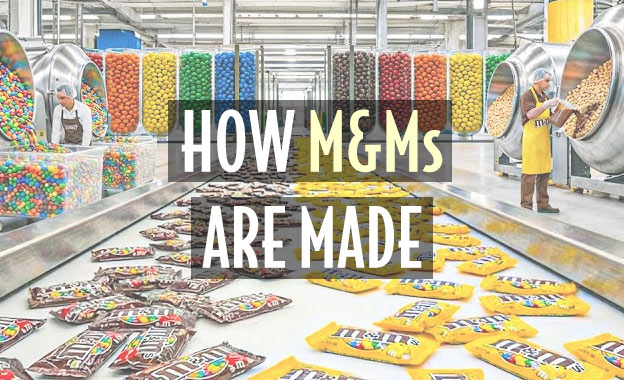
Here’s a tasty video of how M&M’s and peanut M&M’s are made, from melted chocolate to the finished candy bag.
An M&M Starts With the Chocolate Center
The process begins with the chocolate. Ingredients like cocoa, sugar, milk, and cocoa butter are blended into a smooth chocolate mixture. In a candy factory, this is not just a matter of melting chocolate and calling it a day. The chocolate has to be carefully mixed, refined, and tempered so it has the right texture, flavor, and firmness.
Tempering is especially important. Chocolate can be surprisingly temperamental—pun intended. If it is heated or cooled the wrong way, it can become dull, soft, streaky, or grainy. For M&M’s, the chocolate has to be smooth enough to shape but firm enough to survive the coating process.
Once the chocolate is ready, it is formed into small centers. These centers are cooled until they harden, creating the base of the classic milk chocolate M&M. At this point, the pieces are not colorful yet. They are basically tiny chocolate centers waiting for their candy armor.
What does “M&M” stand for? The first M represents Forrest Mars, who brought the idea to the U.S. after observing soldiers eating chocolate pellets with a sugar shell during the Spanish Civil War. The second M represents Bruce Murrie, who partnered on the project to secure a reliable supply of chocolate and manufacturing resources during wartime rationing. – WSJ
The M&M Candy Shell Is Built One Layer at a Time
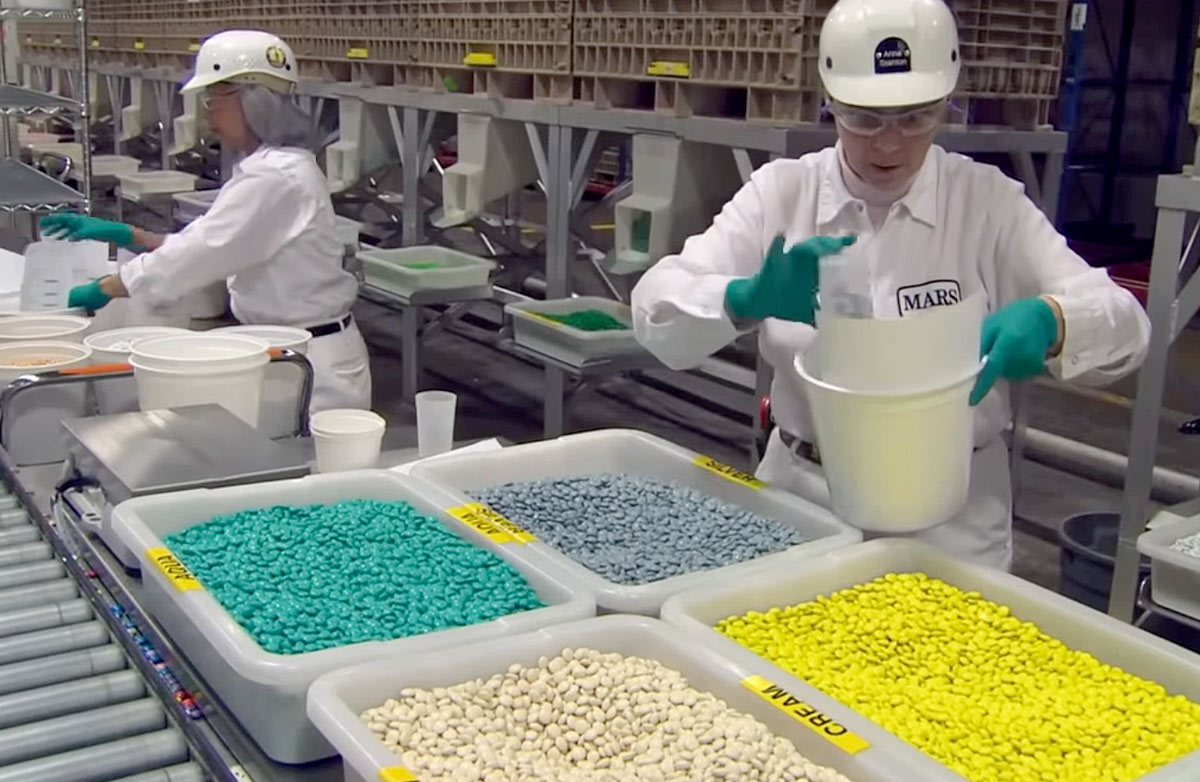
The colorful shell is probably the most recognizable part of an M&M. It gives the candy its crunch, protects the chocolate, and makes it look like something you’d find in a cartoon treasure chest.
But the shell is not added all at once. Instead, the chocolate centers are placed into large rotating pans or drums. As the candies tumble, a sugar-based coating is gradually added in thin layers. The constant motion helps the syrup spread evenly around each piece.
Each layer has to dry before the next one is added. Over time, those thin layers build into the crisp candy shell. This process is called panning, and it is also used for other candies and coated nuts.
The trick is getting the shell just right. Too thin, and it may crack. Too thick, and the candy loses that familiar M&M’s texture. (And might chip some teeth?) The M&M shell has to be light, crisp, smooth, and strong enough to keep the chocolate from melting too quickly in your hand.
The famous slogan “melts in your mouth, not in your hand” is basically a clever way of describing the candy’s engineering. The shell acts like a protective barrier around the chocolate, making M&M’s much easier to carry, share, and snack on than plain chocolate pieces.
Can you take a tour of the M&Ms factory? The massive production facility and corporate headquarters are located at 800 High St, Hackettstown, NJ. While there are no factory tours, you can walk the grounds, visit the My M&M’s store, take photos with outdoor character statues, and enjoy the on-site walking trail and picnic area.
Adding the Famous Colors
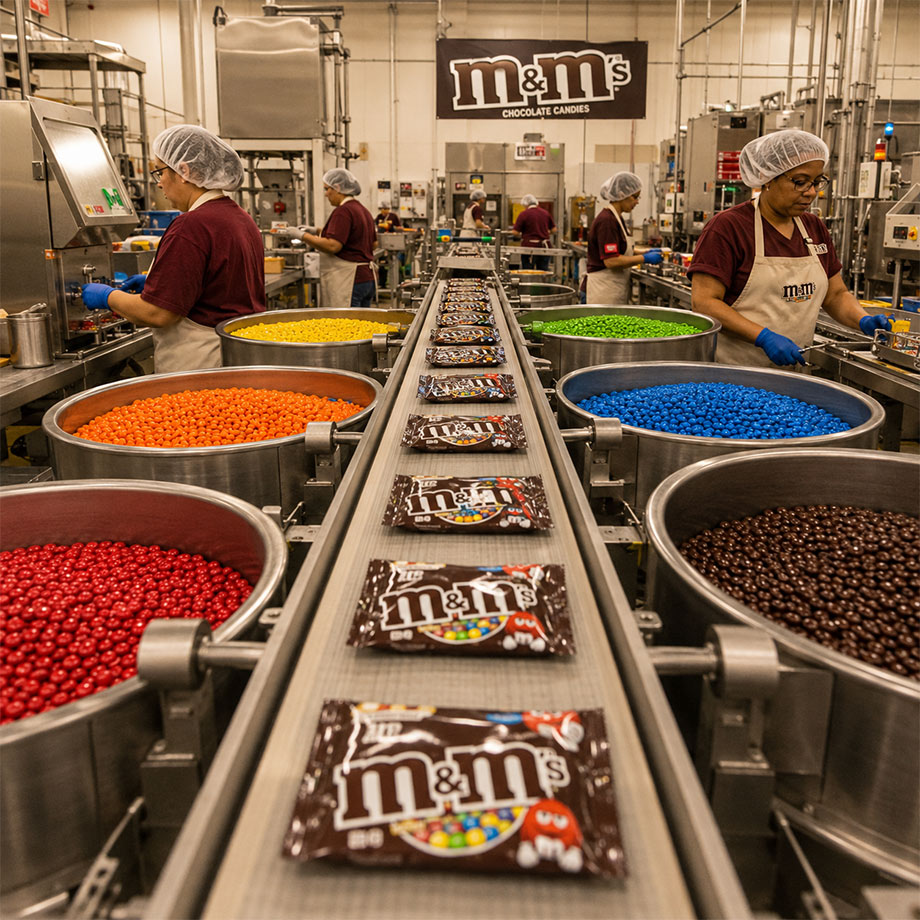
As you probably know, there are 6 M&M colors: red, orange, yellow, green, blue, and brown.
Once the candy shells are built, the pieces are colored. M&M’s are usually made in separate color batches, so the factory has to produce the 6 colors separately before mixing them all together.
The color coating is carefully applied so each candy gets that smooth, glossy finish. After drying, the candies are polished so they have the bright look people expect when they open a bag.
One fun thing about M&M’s is how strongly people connect with the colors. Some fanatics swear certain colors taste different, even though the standard milk chocolate pieces are generally the same flavor inside. Others have a favorite color they save for last. It’s candy psychology, and honestly, it works.
Reminds me of the different but similar members of a k-pop band!
Did you know that blue M&M’s were not part of the original lineup of colors? Blue M&Ms were introduced in 1995 after fans voted for blue over pink and purple to replace tan. It is a tiny candy change that somehow feels like a major historical event if you grew up during the tan-to-blue transition.
How the Little “M” Gets Printed
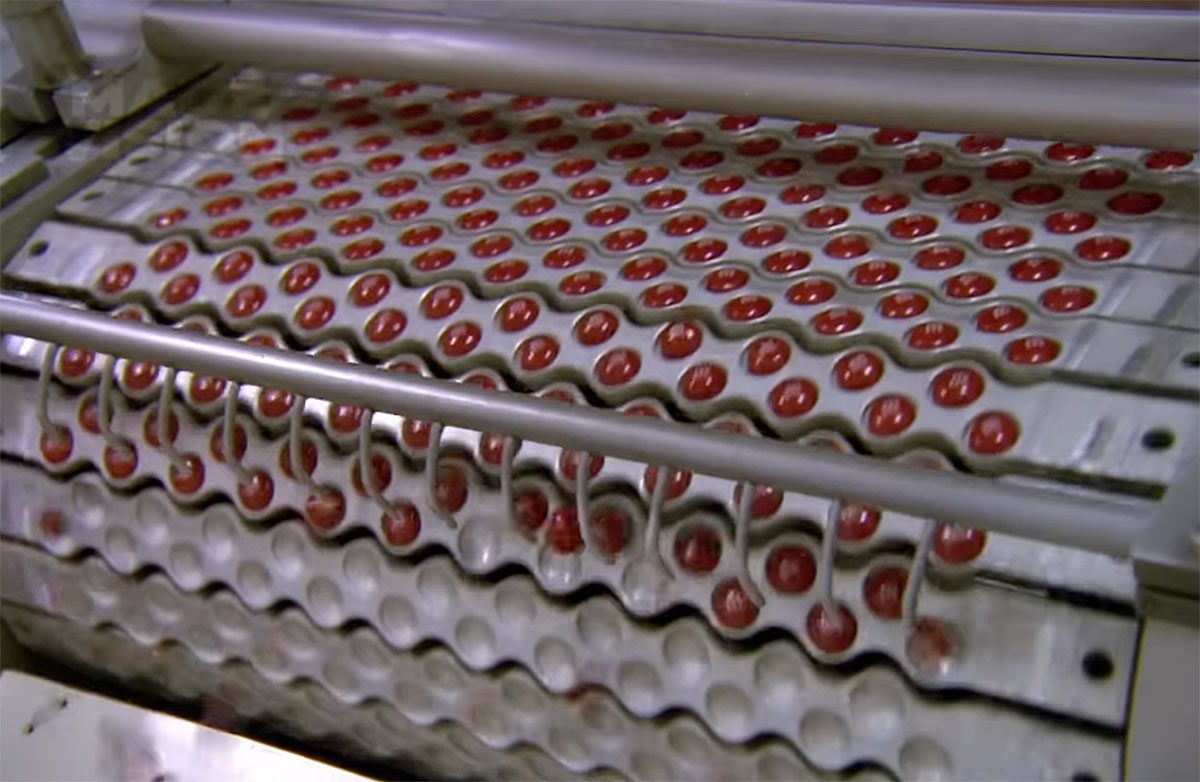
After the candies are coated and colored, they still need their signature mark: the small white “m.”
This part is more delicate than it sounds. The candy shell is crisp, but it can still crack under too much pressure. So the “m” has to be printed gently and quickly, usually with a food-safe edible ink. The machine applies the mark without crushing the candy underneath.
The “m” also has a brand history behind it. It helped customers tell real M&M’s from copycat candies. At one point, the Mars brand even encouraged people to “look for the m.” That tiny letter is not just decoration, it is a little edible trademark.
Did you know that the printed “m” was not always the same color? Early versions of M&M’s used a black “m,” but the white “m” became the familiar look most people recognize today. It is a small design choice, but it makes the letter pop against every candy color.
How Peanut M&M’s Are Made
Peanut M&M’s follow the same basic idea as regular M&M’s, but they start with a roasted peanut instead of a plain chocolate center.
First, peanuts are selected and roasted to bring out their flavor. This step matters because the peanut has to be crunchy, flavorful, and sturdy enough to become the center of the candy. A weak or broken peanut will not make a good Peanut M&M.
Next, each peanut is coated in chocolate. The chocolate layer helps smooth out the shape and creates the bridge between the nut and the candy shell. Since peanuts are naturally uneven, Peanut M&M’s are a little more irregular in shape than regular milk chocolate M&M’s. Some are rounder, some are longer, and some look like they were built around a peanut with a big personality.
Like snowflakes, you could say that no two peanut M&Ms are exactly the same!
After the chocolate layer is added, the pieces go through the panning process. Just like regular M&M’s, they tumble in rotating drums while the candy shell is added in thin layers. Then they are colored, dried, polished, printed with the “m,” and sorted.
Peanut M&M’s became one of the most famous M&M’s varieties because they added a totally different texture: roasted peanut crunch, creamy chocolate, and crisp candy shell all in one bite. They are still close enough to the original idea to feel like M&M’s, but different enough that some people prefer them over the classic version.
Peanut M&M’s were introduced in 1954, the same year the M&M’s characters began appearing in advertising. Maybe the peanut M&M’s are more relatable, as no two people are the same, either!
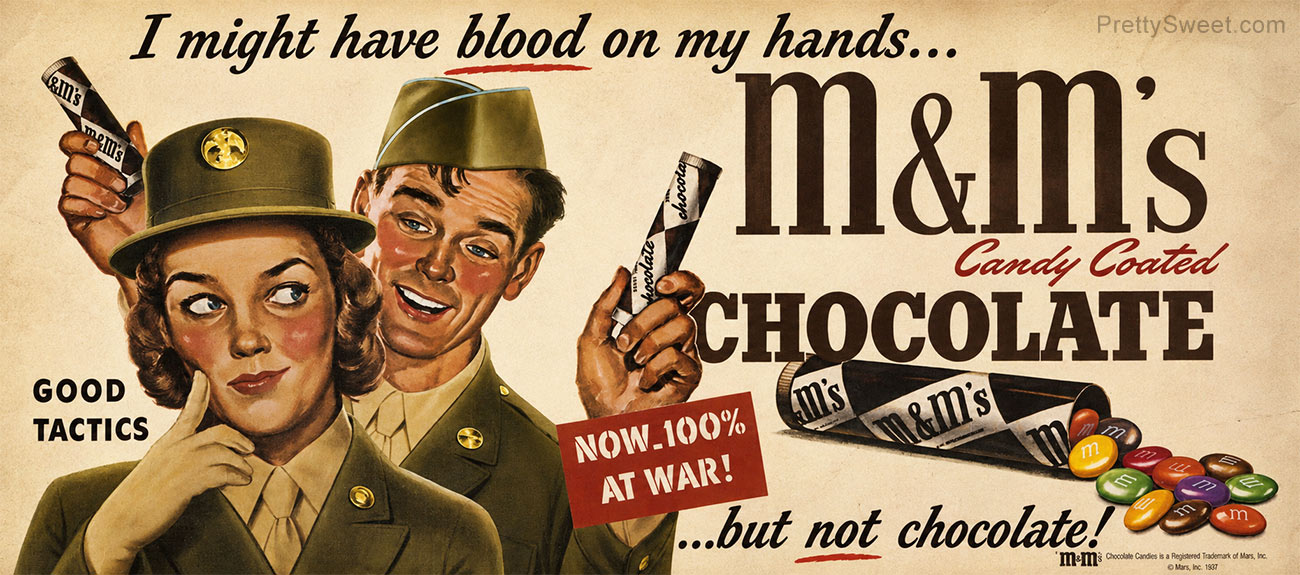
Ever try to shoot someone when your hands are covered in chocolate? Trust me, it’s not ideal. Forrest Mars wanted a candy soldiers could carry without it melting, so M&M’s became popular with the U.S. Army during World War II. The whole “melts in your mouth, not in your hand” idea came from that very practical problem.
Sorting, Mixing, and Packaging M&M’s
Once the candies are finished, they go through quality control. Misshapen pieces, cracked shells, or candies with printing issues can be removed before packaging. The good pieces are mixed into the correct color blend and sent to packaging machines.
From there, the candies are weighed, dropped into bags, sealed, and boxed for shipping. The goal is consistency. Whether you buy a small checkout-lane bag or a giant party-size bag, the candy should taste and feel familiar.
One of the best factory details is the smell. People who visit chocolate and candy factories often describe the air as sweet, warm, and almost overwhelming. It sounds magical, although you can imagine that after a full workday, even the smell of chocolate might start to feel like part of the uniform.
Where do all the oddly shaped M&Ms go? I think they should give them away instead of discarding them! Maybe I’ll loiter around the dumpsters at the M&Ms factory and try to get some!
M&M’s: A Tiny Candy With a Big Journey
The most interesting thing about M&M’s is how much has to happen before they reach your hand. Each piece is mixed, shaped, cooled, coated, dried, colored, polished, printed, sorted, and packaged.
That is a lot of work for something most of us eat by the handful.
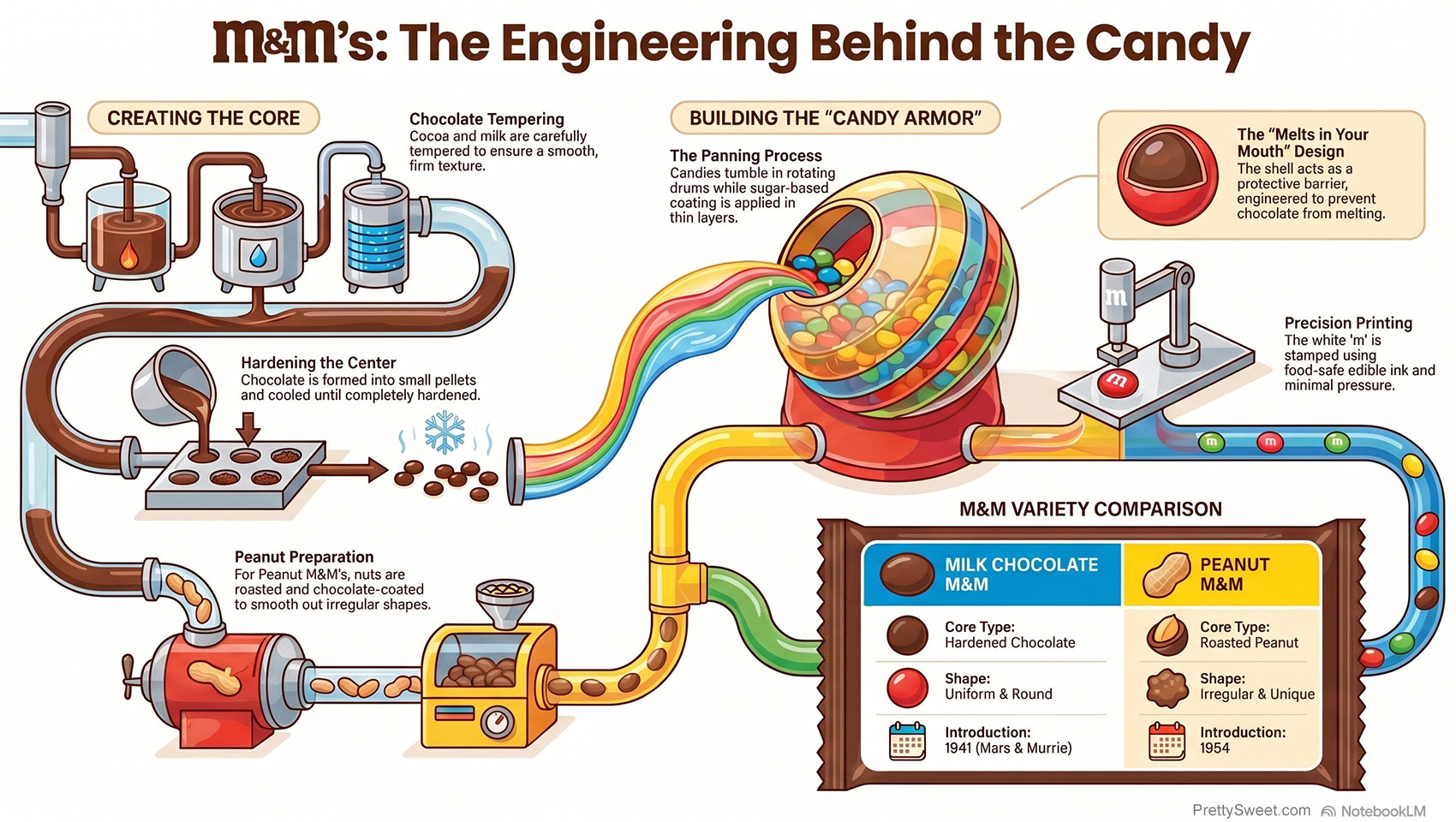
And maybe that is the charm of M&M’s. They are tiny, colorful, and familiar, but they are also little pieces of candy engineering. The shell protects the chocolate. The colors make them fun. The “m” makes them unmistakable. And the whole process turns simple ingredients into one of the most recognizable candies in the world.
So the next time you open a bag of M&Ms, take a second before the first handful disappears. Every M&M has been on a longer journey than it looks.
OK, now I want to eat an entire bag of peanut M&Ms. Thanks for stopping by PrettySweet.com!

I’m a dad of four, including 3 kids and a Hungarian Vizsla who is my partner about 22 hours a day. I’m a Philly sports fan and enjoy writing about wellness, saving money, and personal finance. Thanks for reading!
