
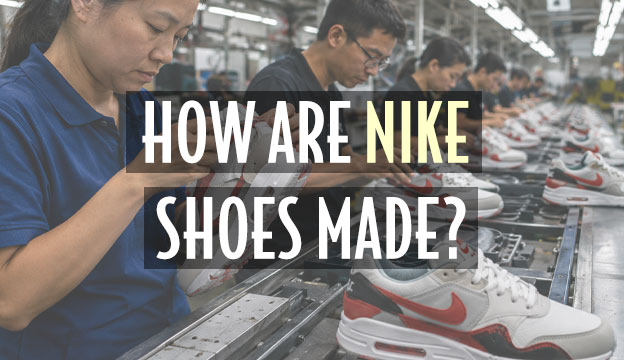
Ever looked down at your Nike sneakers and wondered how they were actually made? Whether you’re rocking a pair of classic Air Force 1s or the latest Flyknits, there is a mind-blowing amount of engineering and history behind every step you take. That Nike shoe makes an incredible journey from materials in a foreign factory to your feet!
Nike produces over 750 million pairs of shoes every single year, and the journey from a simple idea to the box in your closet is a high-tech adventure. Let’s dive into the fascinating world of manufacturing and look at how Nike shoes are produced in factories!
How Nike Shoes Are Made in a Factory:
OK, got all of that?! Here’s a breakdown of the Nike shoe manufacturing process step-by-step:
1. The High-Tech Design Table
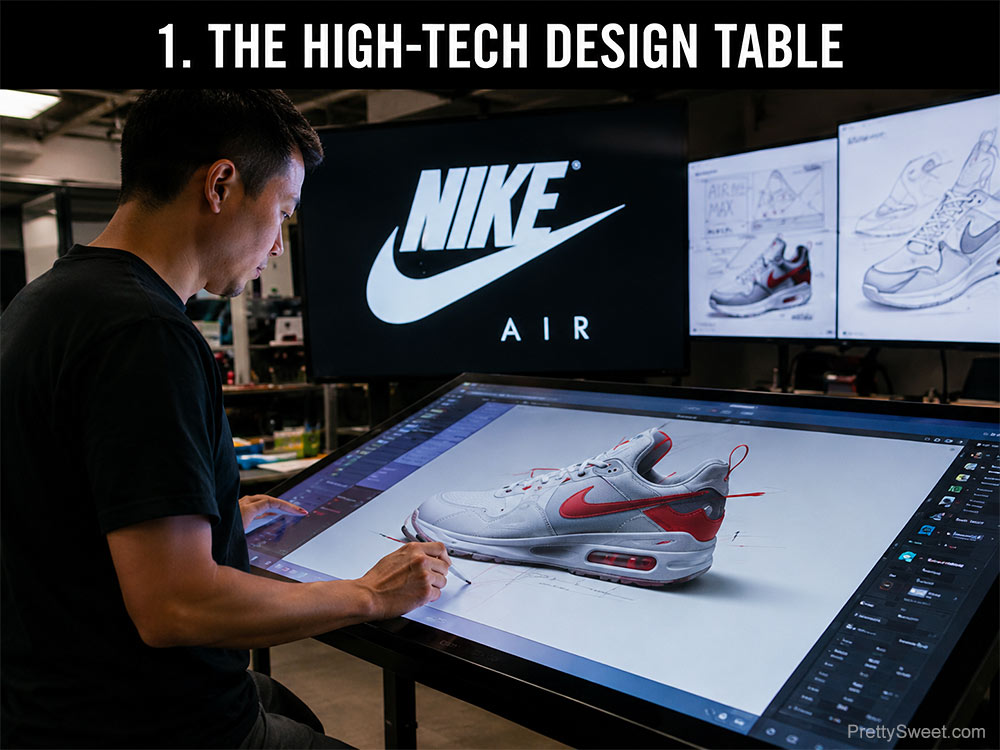
The magic starts long before a factory floor is even involved. Nike designers brainstorm new lines by using cutting-edge 3D software. This allows them to adjust every tiny detail, from the curvature of the sole to the exact placement of the stitching, without needing to build dozens of physical prototypes. Every measurement is meticulously calculated to ensure the final product isn’t just stylish, but also durable and comfortable enough for top-tier athletes.
Did you know the Air Max 1 was inspired by a Paris building? Designer Tinker Hatfield (great cat name!) borrowed the Centre Pompidou’s “inside-out” architecture to expose Nike’s Air cushioning through a visible window in the sole.
2. Sourcing Sustainable Materials
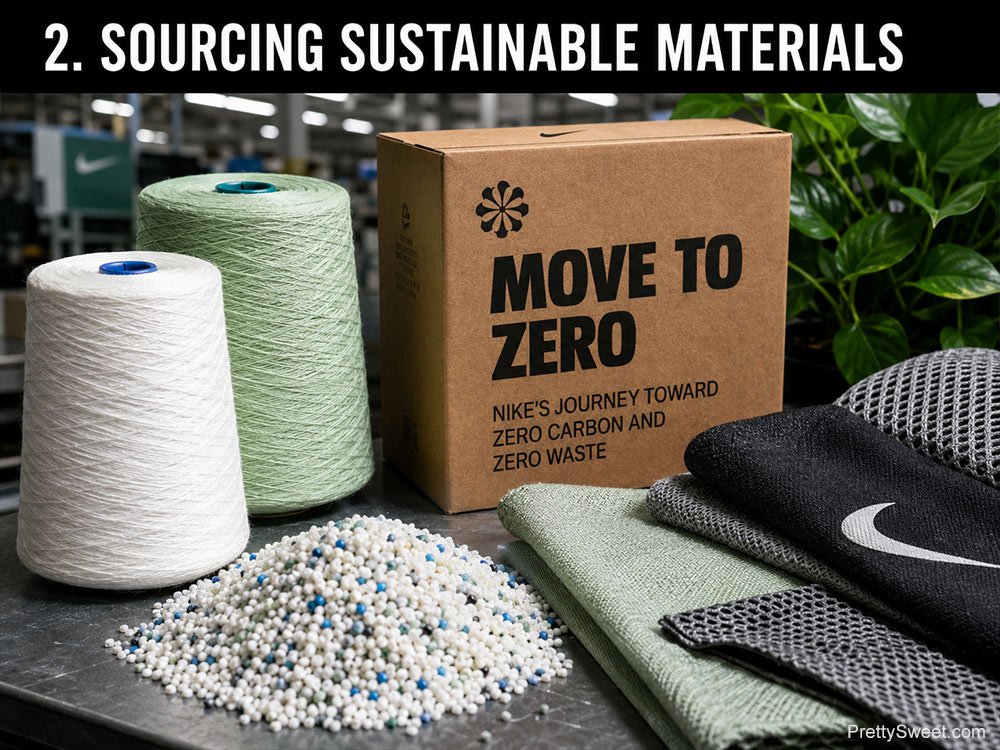
Once the blueprint is ready, it’s time to pick the “ingredients.” Nike is huge on sustainability, with over 50% of their materials coming from recycled sources. Depending on the model, they’ll gather high-quality mesh, synthetic leather, rubber, and EVA foam for that perfect bounce.
For lines like Flyknit, they even use recycled fibers to help reduce plastic waste. But they don’t just take the material’s word for it; everything undergoes rigorous testing for breathability and stretch.
Flyknit can reduce upper-material waste by about 60%. Instead of cutting numerous fabric pieces from sheets, machines knit each upper close to its finished shape and specifications. Also, many Flyknit uppers contain recycled plastic bottles!
3. Precision Cutting with Robotic Arms
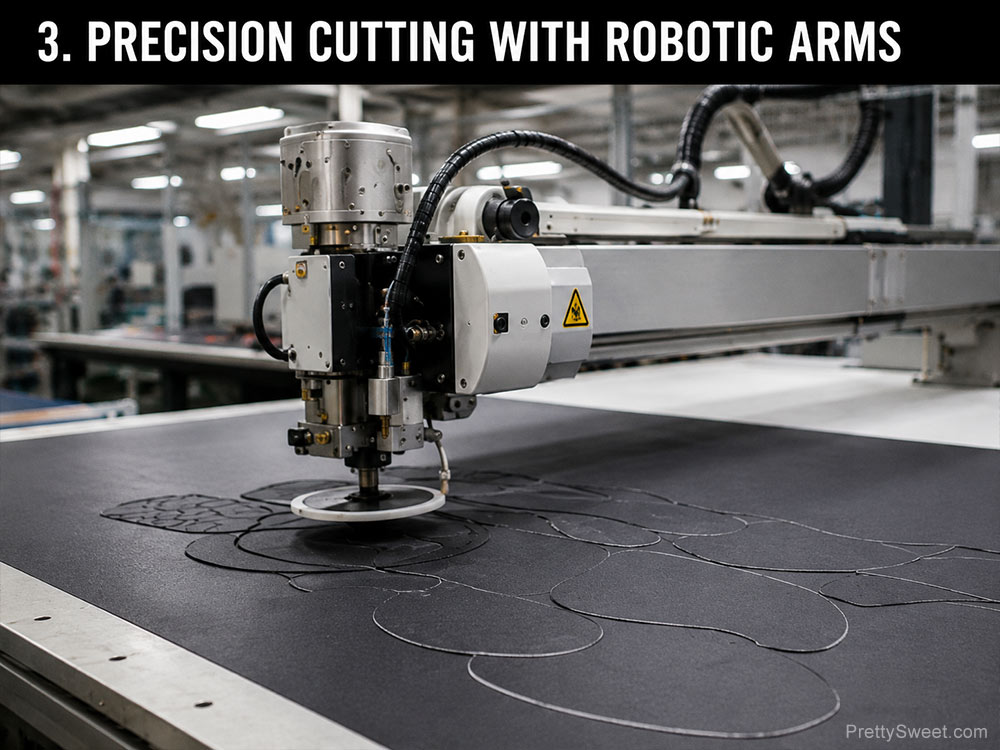
Gone are the days of manual cutting. Today, robotic arms take over the heavy lifting. These machines lift the materials onto cutting tables and make exact slices with incredible speed. This ensures that every single piece of the shoe is uniform in size and shape, allowing a single production line to process thousands of pieces every hour.
Nike uses robotic arms to test shoe soles before they are attached to an upper. At its advanced product-creation facilities, a robotic arm fitted with a vacuum attachment repeatedly handles and tests outsoles, helping engineers evaluate performance with greater speed and precision.
4. Making the Soul of the Shoe: Nike Air Soles
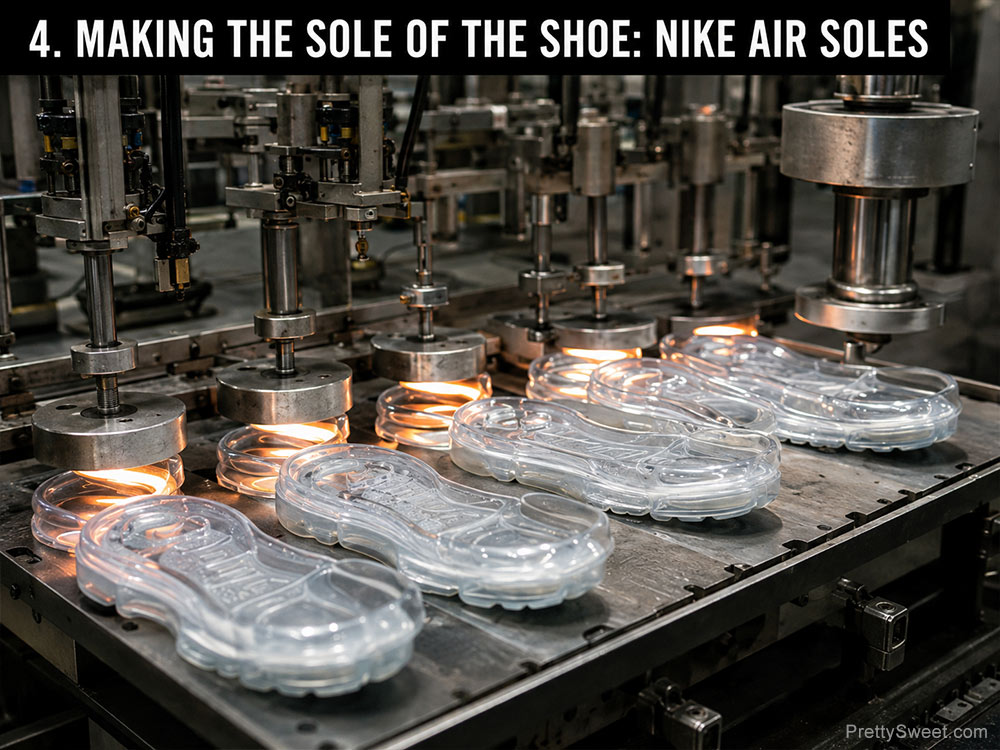
This is where Nike’s most iconic tech comes to life. To create those famous Air soles, the factory uses thermal molding and pneumatic technology to trap tiny pockets of compressed air inside the sole. These air pockets are designed to provide shock absorption and cushioning that won’t collapse over time. Every single air pocket is tested for durability, and if it leaks or fails, it doesn’t make the cut!
Nike’s first waffle sole was inspired at breakfast. In 1971, co-founder Bill Bowerman noticed the grid pattern on his wife’s waffle iron and realized it could create a lightweight running sole with better traction. He poured urethane into the iron, helping inspire the Nike Moon Shoe and later the bestselling Waffle Trainer.
5. Shoe Assembly and Finishing Touches
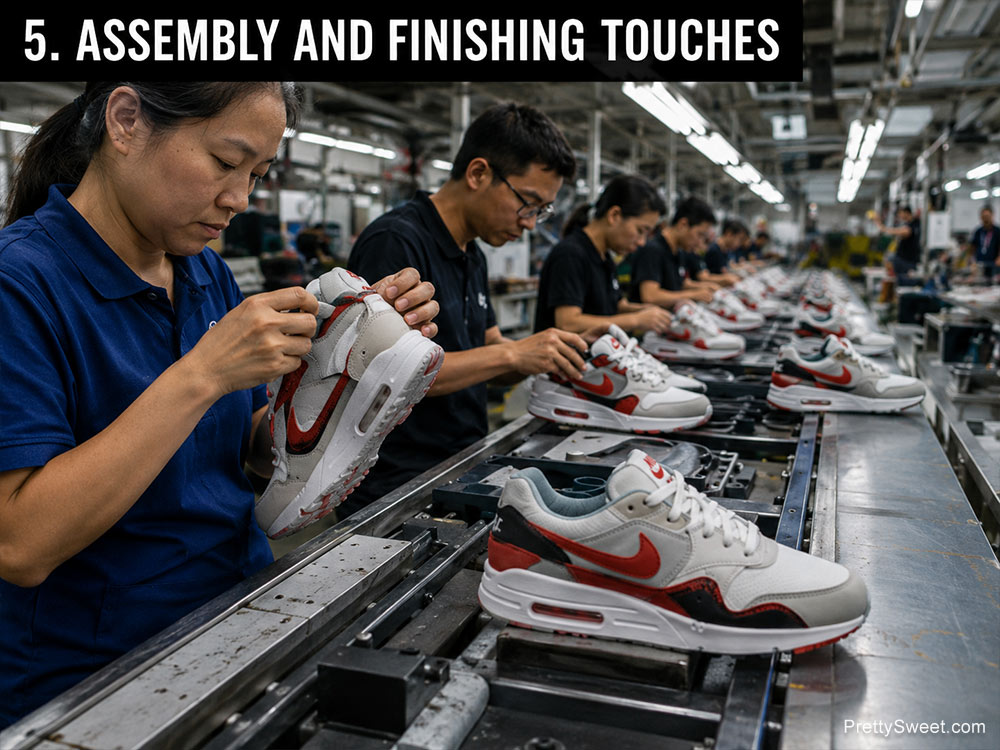
Now, the shoe finally starts to look like a shoe! The soles are sent to the assembly line to be attached to the “upper” part of the sneaker. Skilled workers use industrial sewing machines to embroider the iconic Swoosh logo and add decorative details. It’s a mix of heavy machinery and fine craftsmanship that brings the whole design together.
Nike Air was proposed by an aerospace engineer. Frank Rudy adapted pressurized-gas technology to create cushioning units inside shoe soles, leading to the first Nike Air footwear in the late 1970s
6. The Gauntlet: Strict Nike Quality Control
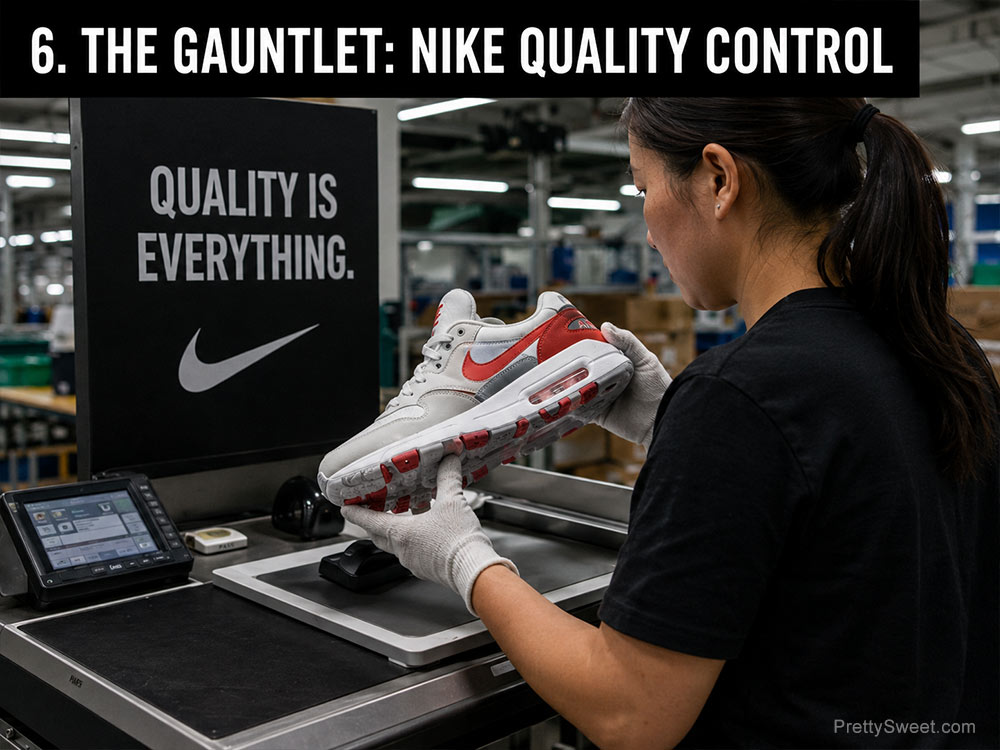
Nike doesn’t just ship shoes; they test them to the limit. Before leaving the factory, every shoe goes through a “stress test” where it is bent and twisted to ensure it can handle real-world use. They have specific standards for traction and load-bearing, and inspectors check every single stitch to make sure it’s flawless.
The Nike Cortez was Nike’s first commercially released shoe. Designed by co-founder and track coach Bill Bowerman, it debuted in 1972 as a lighter, more comfortable running shoe, and would become a lasting pop-culture icon.
7. Packaging and Global Shipping
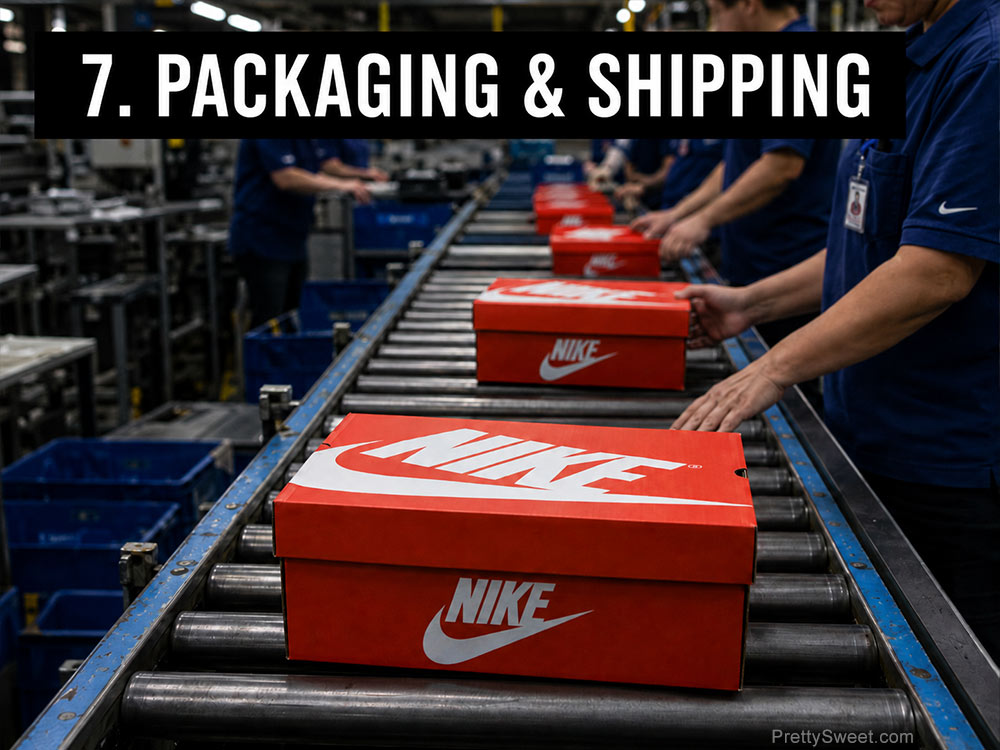
Once a shoe passes its final exam, it’s tucked into one of those signature orange boxes with protective packaging to prevent scuffing. From there, the shoes are palletized and moved to the shipping area. Thanks to a massive global supply chain, these shoes are quickly sent from the factory to store shelves all over the world.
Why Do Nike Shoes Cost So Much?
It’s a question everyone asks when they see a $150+ price tag. While you are paying for the brand, you’re also paying for serious innovation. Nike invests millions of dollars every year into Research and Development (R&D) to create proprietary tech like Flyknit and React foam.
Then, of course, there’s the fact that Nike employs over 70,000 people around the world! (source)
Furthermore, their shift toward sustainability increases the cost. For example, by using recycled fibers they can reduce production waste by up to 60%. However, that requires more complex manufacturing processes that increase expenses.
Also, when you buy a pair of Nikes, you’re helping to pay all of those athletes sponsored by Nike with multi-million dollar shoe deals. In any event, maybe they aren’t charging enough for their shoes, as the stock has performed terribly over the years!
How Nike Shoes Are Made FAQs
Most Nike shoes are manufactured by independent suppliers in countries such as Vietnam, China, and Indonesia. Nike designs and develops its footwear but contracts outside factories to produce most of its shoes.
Nike shoe soles are typically made by molding rubber and foam under heat and pressure. The finished outsole and midsole are then bonded to the shoe’s upper using adhesive and specialized machinery.
Nike shoes are made through a combination of manual labor and automated machinery. Machines cut, mold, stitch, and test components, while factory workers assemble, inspect, and finish many parts of the shoe by hand.
Yes. Nike uses recycled polyester, rubber, foam, yarn, and manufacturing waste in select shoes. Many Flyknit uppers contain recycled plastic bottles!
The exact production time varies by model and factory. A pair must pass through multiple stages, including material cutting, stitching, molding, assembly, drying, inspection, and packaging. Watch this video to see the timeline:
Nike Air cushioning is made by sealing pressurized gas inside flexible plastic units. These lightweight Air units are placed inside the midsole of shoes to absorb impact and provide cushioning.
Conclusion
From a track coach’s experiment with a waffle iron in 1971 to the robotic precision of today’s factories, Nike has turned shoemaking into a literal science. The next time you lace up your Nikes, remember that your shoes have been 3D modeled, robotically cut, and air-molded, just to give you the best experience and fit possible.
Whether you’re a hardcore athlete or a casual sneakerhead, it’s clear that a lot of heart (and tech!) goes into every pair.
I hope you enjoyed the video of how Nike shoes are made, and thanks for stopping by PrettySweet.com!

I’m a dad of four, including 3 kids and a Hungarian Vizsla who is my partner about 22 hours a day. I’m a Philly sports fan and enjoy writing about wellness, saving money, and personal finance. Thanks for reading!