
If you’re trying to lose weight, there’s a good chance you’ve come across both WeightWatchers and MyFitnessPal. They’re two of the most popular weight loss apps available today, but they take very different approaches.
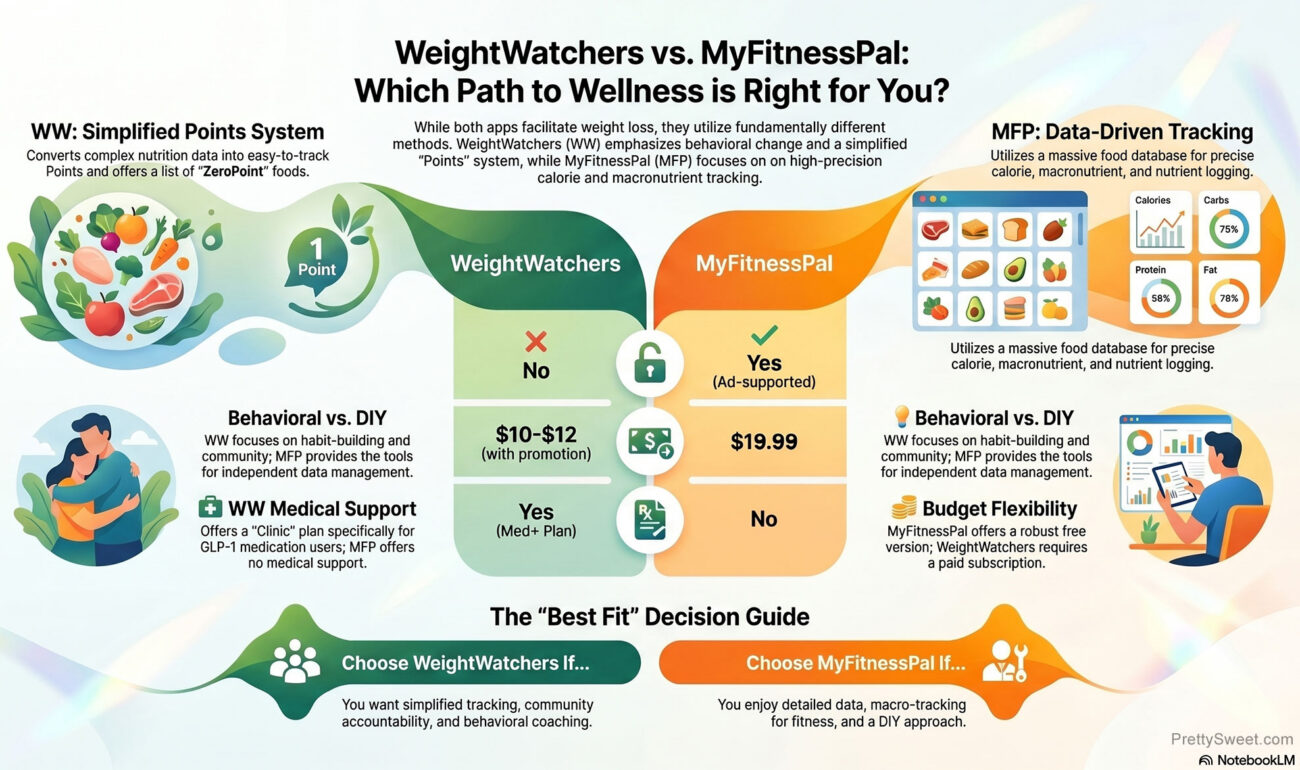
WeightWatchers focuses on simplifying food choices through its Points system and behavior-based coaching, while MyFitnessPal centers on calorie counting, nutrition tracking, and detailed food data.
So which one is right for you? The answer depends largely on your personality, goals, and how you prefer to track your progress. In this guide, we’ll compare WeightWatchers and MyFitnessPal side by side, including how they work, what they cost, and how newer options, like prescription GLP-1 weight loss medications, fit into the picture.
The Core Difference: Points vs. Calories
At its heart, the WeightWatchers vs. MyFitnessPal debate comes down to simplicity versus precision. I’ll explain:
WeightWatchers: A Simpler, Behavior-Focused Approach
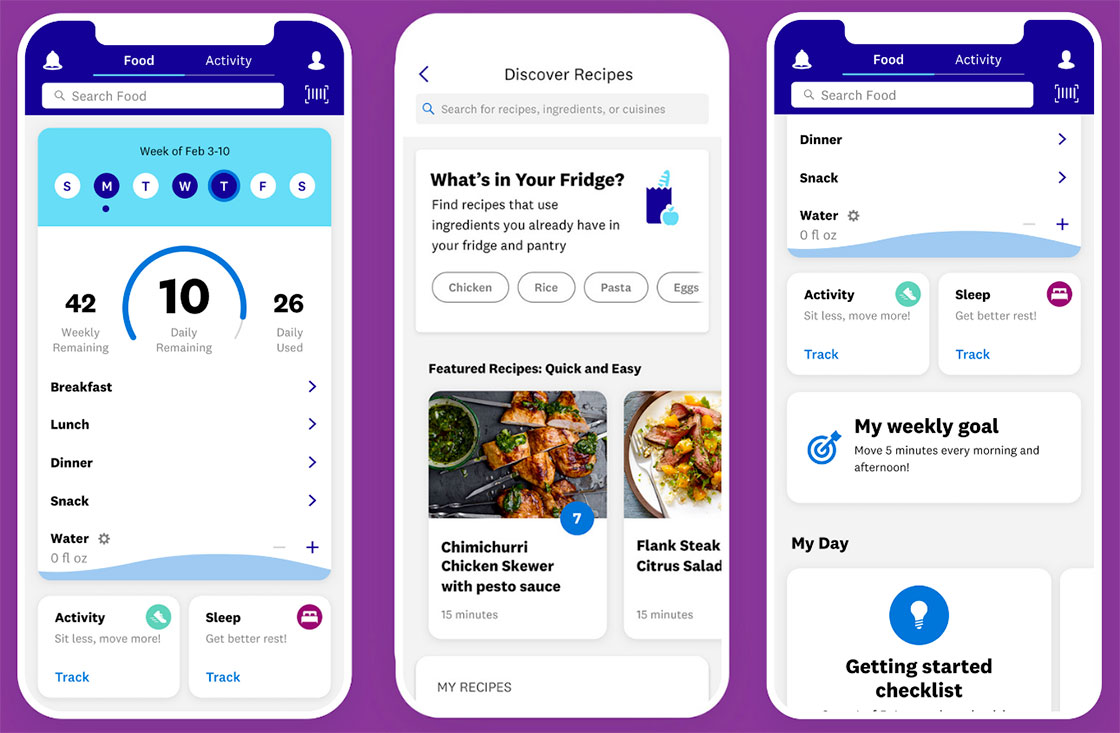
WeightWatchers is designed to make healthy eating feel less like math homework. Instead of tracking calories and nutrients individually, foods are assigned a Points value based on factors such as calories, protein, fiber, sugar, and saturated fat. Foods that are generally more filling and nutritious tend to have lower Point values, while foods higher in sugar and saturated fat tend to have higher values.
The program also includes a large list of ZeroPoint foods, such as many fruits, vegetables, eggs, fish, and lean proteins. These foods don’t count against your daily Points budget, which can make the program feel more flexible and sustainable for many people. Beyond food tracking, WeightWatchers places a strong emphasis on behavior change, (like Noom) habit building, and community support.
Tip: WW offers very good promotions for new and returning customers that save about 50% off the cost, plus discounts for groups like students and teachers!
MyFitnessPal: Detailed Nutrition Tracking
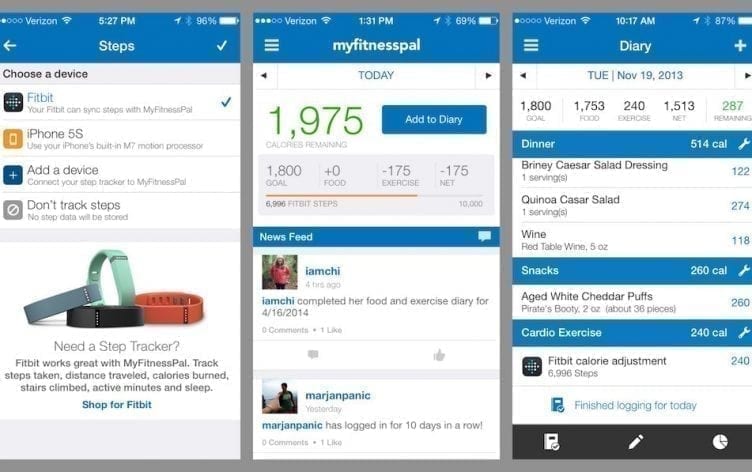
MyFitnessPal takes a more data-driven approach. Rather than converting food into Points, it tracks calories, macronutrients, and other nutrition information directly. The platform features one of the largest food databases available, making it easy to log meals, scan barcodes, and monitor daily intake.
For people who enjoy numbers, DIY, and want complete control over their nutrition, MyFitnessPal can be incredibly powerful. Whether you’re tracking calories, protein, carbohydrates, fat, or specific fitness goals, the app provides detailed information without steering you toward particular food choices. It simply gives you the data and lets you decide how to use it.
Weight Watchers vs MyFitnessPal Comparison:
| Feature: | Weight Watchers: | MyFitnessPal: |
|---|---|---|
| Free Version? | No | Yes (Food and calorie logging with ads) |
| Monthly Cost: | $10-12/mo with promotion | $19.99/mo |
| Medical / GLP-1 Plan | Yes | No |
| Summary: | Point system, ZeroPoint foods, behavioral lessons | Calorie budgets, macro targets, database scanning |
I think it’s surprising that WW costs less than MyFitnessPal, but if you commit to a year, they both cost about the same.
Ratings Comparison:
As you can see, both WeightWatchers and MyFitnessPal are rated very highly on the App Store based on millions of ratings:
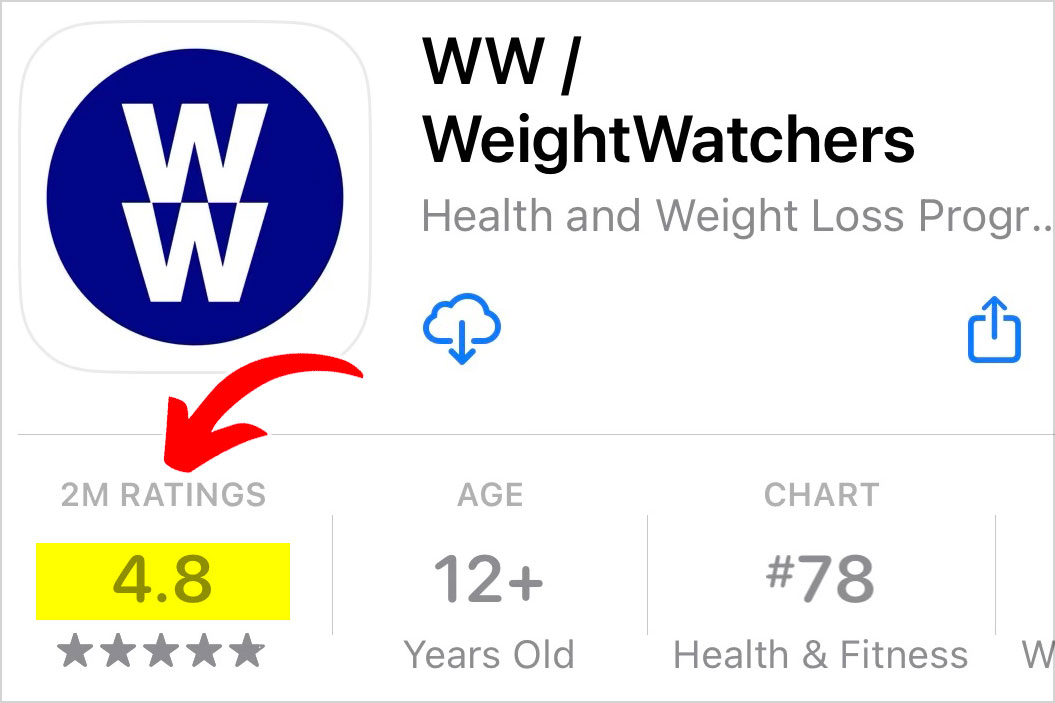
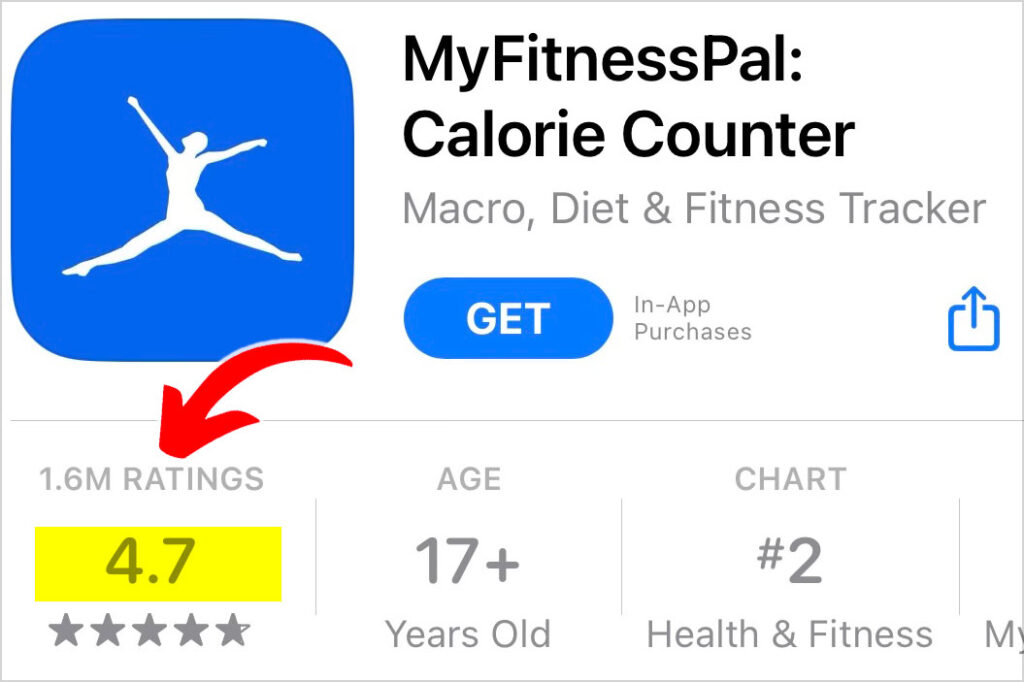
While the difference between those ratings is negligible, there’s one important difference: WeightWatchers offers the option of GLP-1 weight loss medications with their MED+ plan.
WeightWatchers Clinic vs. MyFitnessPal for GLP-1 Users
One of the biggest differences between WeightWatchers and MyFitnessPal is how they fit into the growing world of medical weight loss. WeightWatchers Med+ combines access to healthcare providers with nutrition and lifestyle support, creating a more comprehensive experience for people using GLP-1 medications such as Wegovy or Zepbound.
Because these medications can significantly reduce appetite, WeightWatchers adapts the experience to focus on important habits like eating enough protein, staying hydrated, and getting adequate nutrition. The program also includes behavioral coaching designed to help members build sustainable routines that can support long-term success, whether they remain on medication or eventually stop taking it.
MyFitnessPal remains a powerful nutrition-tracking tool, but it does not offer GLP-1 medication or medical support. You can certainly use MyFitnessPal while taking a GLP-1 medication prescribed by your doctor, but you’ll be responsible for managing your healthcare and nutrition plan independently.
Which Is Better: WeightWatchers or MyFitnessPal?

The truth is that neither app is universally better. The right choice depends on your personality, goals, and how you prefer to approach weight loss.
WeightWatchers is better if…
- You want support beyond food tracking. WeightWatchers combines nutrition guidance, behavior-change tools, community support, and, for some members, access to medical weight loss services through WeightWatchers Clinic.
- You feel overwhelmed by calorie counting. If tracking every calorie leaves you frustrated or burned out, the Points system can feel much simpler and easier to stick with long-term. The inclusion of ZeroPoint foods also provides a level of flexibility that many people find refreshing.
- You benefit from structure and accountability. WeightWatchers is designed to help people gradually build healthier habits rather than simply monitor numbers. If encouragement, coaching, and community support help keep you motivated, WW has a lot to offer.
MyFitnessPal May Be Better If…
- You enjoy tracking detailed nutrition data. If you’re the type of person who likes seeing exactly how many calories, grams of protein, carbohydrates, fiber, or sodium you’re consuming, MyFitnessPal provides an impressive level of detail and customization.
- Fitness and performance are major goals. For people focused on strength training, muscle building, endurance sports, or macro tracking, MyFitnessPal’s data-driven approach can make meal planning and recovery easier to manage.
- You prefer a do-it-yourself approach. If you’re already working with your own healthcare provider, or simply don’t need coaching or community support, MyFitnessPal gives you the tools to track your progress without adding extra layers of guidance.
- You’re looking for a strong free option. MyFitnessPal’s free version remains one of the most capable nutrition-tracking tools available, making it an attractive choice for budget-conscious users.
The Bottom Line
Both WeightWatchers and MyFitnessPal can be effective tools for weight loss, but they solve different problems.
WeightWatchers focuses on building healthier habits through a structured Points system, coaching, and support. MyFitnessPal focuses on giving you detailed nutrition data and the flexibility to manage your own plan.
If you’d rather spend less time thinking about calories and more time building sustainable habits, WeightWatchers may be the better choice. If you enjoy tracking numbers, setting custom nutrition goals, and having complete control over your data, MyFitnessPal may be a better fit. The best program is the one you’ll actually use consistently, and the one that makes healthy choices feel easier, not harder.
Have you tried WeightWatchers and MyFitnessPal? If you have an opinion, drop us a line below. Thanks for visiting PrettySweet!

I’m a dad of four, including 3 kids and a Hungarian Vizsla who is my partner about 22 hours a day. I’m a Philly sports fan and enjoy writing about wellness, saving money, and personal finance. Thanks for reading!
